
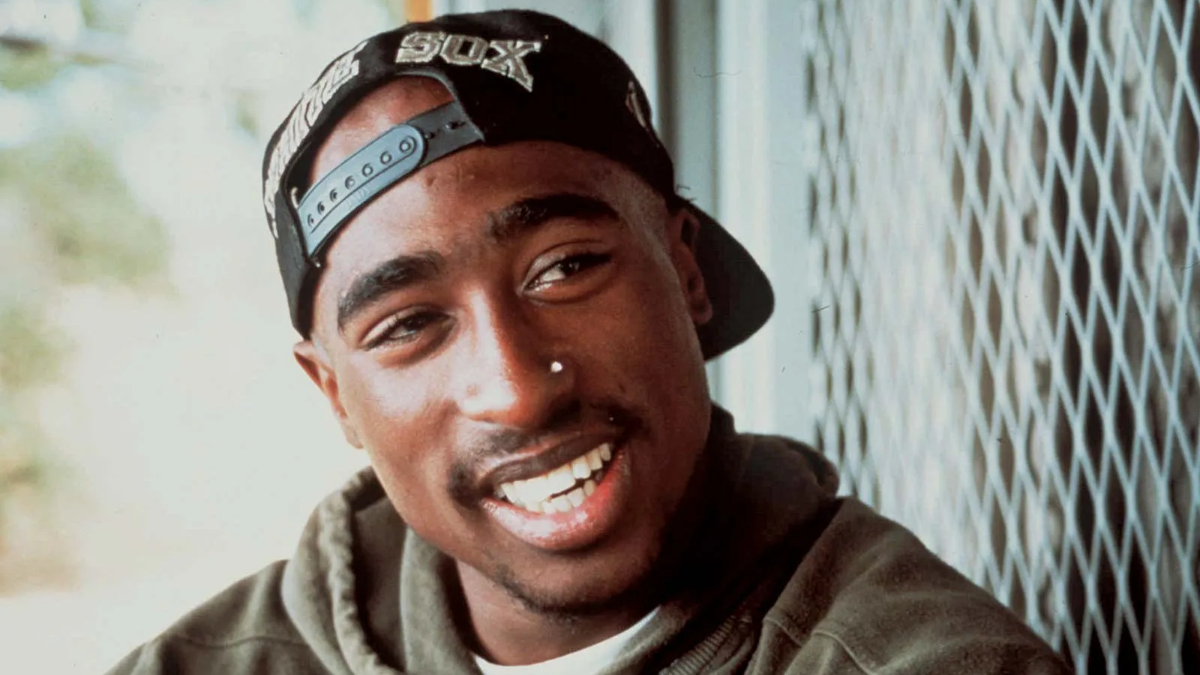
From the height of his music career to his final trip to Las Vegas, Tupac Shakur’s last days were filled with ambition, music and moments that would soon take a tragic turn.
For Tupac Shakur, September 1996 was supposed to be another chapter in a career that was moving at extraordinary speed.
At just 25, the rapper was not only one of the biggest names in hip-hop but was also building a future beyond music. He was acting, recording, performing and working on projects that showed no sign of slowing down.
Then came a trip to Las Vegas.
Six days later, Tupac was dead.
His final days have since become one of the most closely examined periods of his life—not only because of what happened on the night of September 7, 1996, but because of how much was happening around him before the shooting.
Tupac was at the height of his career
By 1996, Tupac had already established himself as a major force in music.
His album All Eyez on Me had reached No. 1 on the charts after its release earlier that year, while his work outside music was also gaining momentum.
He had appeared in films and was continuing to pursue acting. During the summer of 1996, he had been working on Gang Related, a film starring Jim Belushi.
There was little indication that his career was about to come to an abrupt end.
Instead, Tupac appeared to be pushing forward.
A trip to Las Vegas
On September 7, Tupac travelled to Las Vegas with Death Row Records boss Marion “Suge” Knight and members of his entourage.
The main reason for the trip was boxing.
Mike Tyson was scheduled to face Bruce Seldon at the MGM Grand Garden Arena, and Tupac was among those watching from ringside. Tyson won the fight by first-round knockout in less than two minutes.
For a moment, the night looked like a celebration.
It would soon take a completely different turn.
The confrontation that changed the night
After the fight, Tupac and members of his entourage became involved in a confrontation inside the MGM Grand involving Orlando “Baby Lane” Anderson, a member of the South Side Compton Crips.
Security footage captured part of the altercation, according to reports on the case.
The confrontation would later become a major part of the investigation into Tupac’s murder.
Prosecutors eventually argued that the shooting was retaliation for that earlier fight.
For years, however, exactly what happened afterward remained the subject of investigation and competing accounts.
Tupac was still expected to perform
After leaving the MGM Grand, Tupac and Knight were headed toward Club 662.
Tupac was scheduled to perform there that night at an event connected to efforts to raise money for a gym aimed at helping young people stay away from violence, according to accounts of the night.
He never made it to the stage.
As the BMW carrying Tupac and Knight travelled through Las Vegas, a white Cadillac pulled alongside the vehicle at a stoplight.
Gunfire erupted.
Tupac was struck four times. Knight was also wounded, although his injuries were less serious.
The shooting lasted only seconds.
Its consequences would last for decades.
The six days that followed
Tupac was rushed to University Medical Center in Las Vegas, where doctors treated his gunshot wounds and performed emergency surgery.
In the days that followed, reports indicated that he remained in critical condition. At points, there were signs that his condition had improved, giving those around him hope that he might survive.
But the injuries were severe.
Tupac remained in the hospital as doctors continued treating him.
On September 13, six days after the shooting, he died.
He was 25.
The hospital reported that Tupac died at 4:03 p.m. from respiratory failure and cardiopulmonary arrest.
A career that ended in the middle of a rise
What makes Tupac’s final days particularly striking is how much still appeared to be ahead of him.
He was not a fading star. His music career was thriving, his acting ambitions were continuing and his public profile remained enormous.
Then, within less than a week, everything stopped.
His death transformed the September 1996 shooting into one of the most enduring mysteries in music history.
For nearly 30 years, the question of who was responsible remained unanswered in court.
That changed in 2026.
Nearly 30 years later, the case finally reached a verdict
On August 31, 2026, a Las Vegas jury found Duane “Keffe D” Davis guilty of first-degree murder in connection with Tupac’s death.
Davis was not accused of being the person who physically pulled the trigger. Prosecutors argued that he helped orchestrate the attack and supplied the firearm used in the shooting.
The jury ultimately accepted the prosecution’s case after hearing evidence that included Davis’ own statements over the years.
Davis plans to appeal.
For Tupac’s family and millions of fans, the conviction marked a dramatic development in a case that had remained unresolved for almost three decades.
But before the courtroom, the investigation and the years of speculation, there was simply a 25-year-old rapper whose career was still unfolding.
His final days were filled with music, acting, ambition and plans for the future.
The future lasted only six more days.
Also Read : Tupac Shakur Murder: How Keffe D’s Own Words Helped Convict Him 30 Years Later