
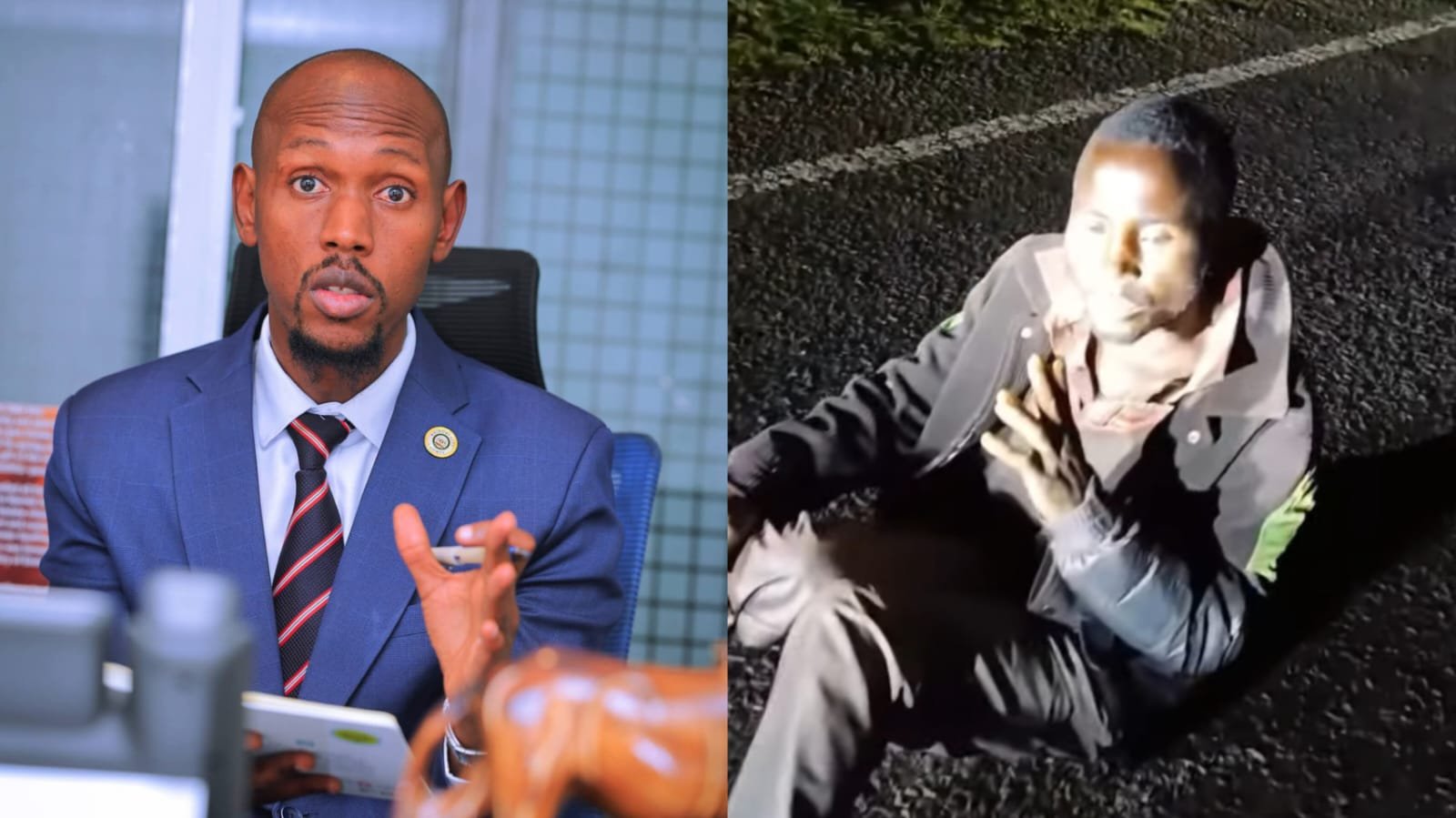
Nairobi County official Geoffrey Mosiria has sparked debate over alcohol consumption after a drunk man was found sitting in the middle of a road.
A routine road incident has sparked a wider conversation about alcohol consumption after a driver encountered a drunk man sitting in the middle of the road and had to stop to get him out of danger.
The incident caught the attention of Geoffrey Mosiria, who used it to make a strong argument about responsible drinking and the amount of money people spend on alcohol.
Mosiria said people who choose to drink alcohol should be licensed, arguing that drinking should not come at the expense of a person’s financial well-being.
“Pombe wale wanakunywa wakuwe licensed. If you must drink alcohol, you must be licensed,” Mosiria said.
He went further, arguing that alcohol should not be a priority for people struggling financially.
“Alcohol is not for a poor man, let the poor invest that money instead of alcohol,” he said.
Mosiria links alcohol to financial priorities
Mosiria’s comments appeared to focus not only on the dangers of excessive drinking but also on the money spent on alcohol.
He urged people with limited financial resources to consider investing their money rather than spending it on alcohol.
His remarks came after the worrying road incident in which a drunk man was reportedly found sitting in the middle of the road.
The driver stopped and intervened, moving the man away from the road while questioning what could have happened if another motorist had failed to see him.
The incident highlights the risks that can arise when someone becomes heavily intoxicated in public, particularly around busy roads where a moment of inattention can have serious consequences.
Reference to traditional African drinking
Mosiria also brought history and culture into his argument, making a reference to traditional African alcoholic drinks such as busaa and chang’aa.
“Even in ancient times in Africa, busaa na chang’aa was meant for kings when he’s celebrating with his people, not poor men,” he said.
His remarks are likely to generate debate, particularly over his suggestion that alcohol consumption should be restricted through licensing and his view that low-income earners should prioritise investment over drinking.
The road incident, however, also raises a more immediate question: what responsibility do motorists and members of the public have when they encounter an intoxicated person in a dangerous location?
In this case, the driver chose to stop rather than simply drive past, potentially preventing what could have been a serious accident.