
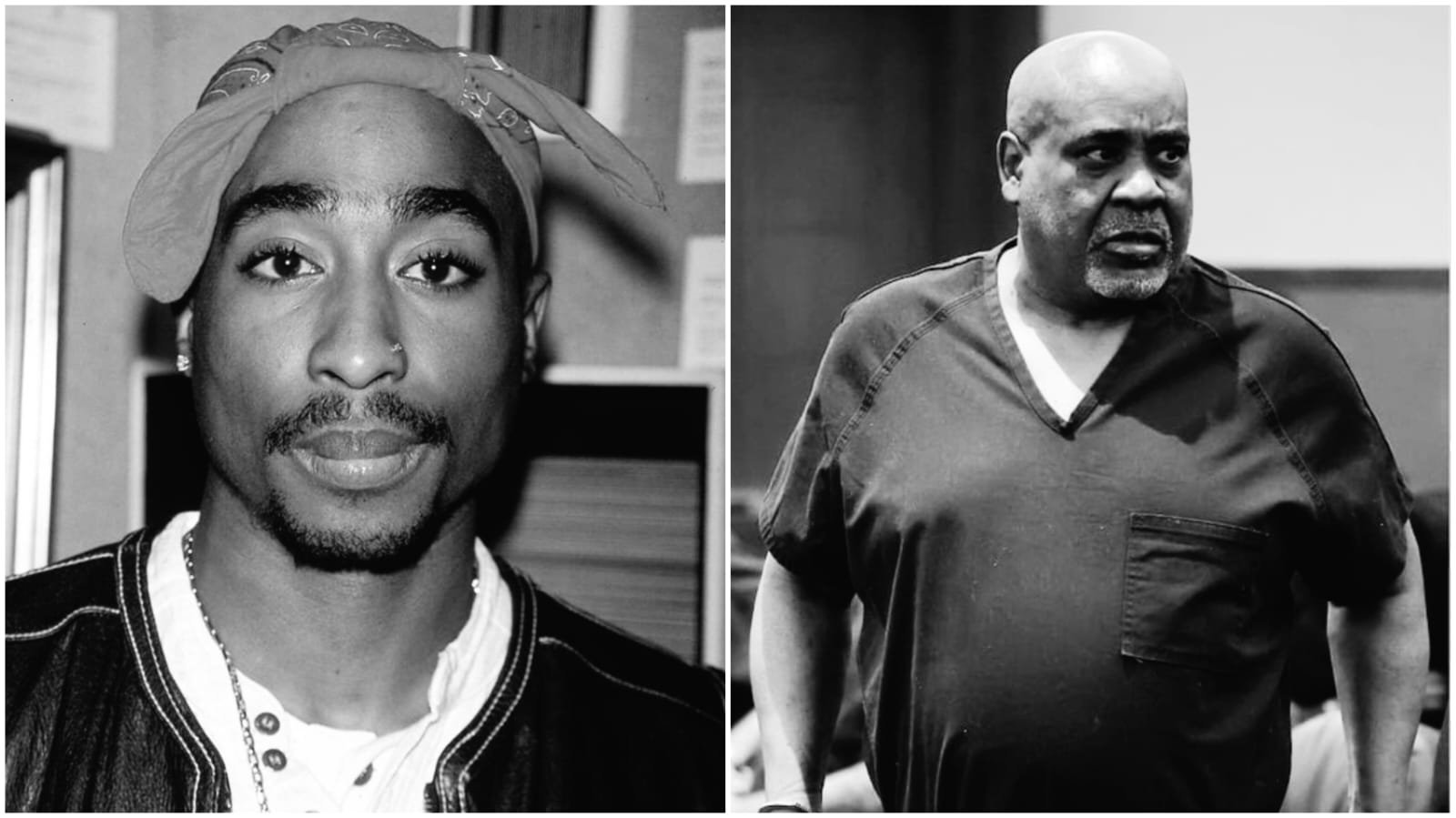
Nearly 30 years after Tupac Shakur was killed in Las Vegas, Duane “Keffe D” Davis has been convicted — with prosecutors turning years of his own public statements into a central part of the case.
For nearly three decades, Tupac Shakur’s murder lived in the space between fact and folklore.
There were theories. There were suspects. There were books, documentaries and endless arguments over who was inside the white Cadillac that pulled alongside the rapper’s BMW on a Las Vegas street in September 1996.
Then Duane “Keffe D” Davis started talking.
On Monday, August 31, 2026, a Las Vegas jury found Davis guilty of first-degree murder with a deadly weapon for his role in the killing of Shakur — a verdict that finally gave the nearly 30-year-old case its first conviction.
But perhaps the most remarkable part of the case is not simply that prosecutors finally caught up with a suspect.
It is how much of their case came from the suspect himself.
The man who kept talking about Tupac
Davis, now 63, was not accused of pulling the trigger.
Prosecutors argued that he helped orchestrate the attack, obtained the firearm and directed the retaliation after his nephew, Orlando “Baby Lane” Anderson, was beaten by Tupac and members of his entourage earlier that night.
Under Nevada law, a person can be held criminally responsible for murder even if they did not personally fire the fatal shots.
And prosecutors spent much of the trial asking jurors to listen to Davis in his own words.
His statements appeared in interviews. His 2019 memoir, Compton Street Legend, was placed before the jury. Investigators also presented recordings of conversations involving Davis.
The prosecution’s argument was straightforward: the story Davis had told publicly for years had placed him inside the vehicle involved in the shooting and described his role in the events.
The defense, however, had a very different explanation.
Davis’ lawyer argued that his client’s stories were exaggerated — the kind of claims a former gang member might make to build his reputation, sell books or remain relevant.
At one point, the defense urged jurors not to believe Davis’ previous accounts.
That strategy ultimately failed.
“They’re trying to use my words against me”
One of the most revealing moments came from a recorded jail call following Davis’ 2023 arrest.
“They’re trying to use my words against me,” Davis said, according to testimony presented at trial.
The line captured the central problem confronting his defense.
For years, Davis had spoken publicly about the night Tupac was shot. Prosecutors now had the opportunity to take those words out of interviews, books and recordings and put them in front of a jury.
The state did not need to convince jurors that Davis had pulled the trigger.
Its case was that he helped set the attack in motion.
Chief Deputy District Attorney Binu Palal told jurors that Davis obtained a gun and went looking for Tupac and Death Row Records co-founder Marion “Suge” Knight after the earlier confrontation.
“Who fired is not the question,” Palal told the jury.
The prosecution’s theory was that the shooting was a planned act of retaliation rather than a spontaneous confrontation.
The white Cadillac became the centre of the case
Tupac was riding in a BMW with Knight when a white Cadillac pulled alongside them at a red light on September 7, 1996.
Gunfire erupted.
Tupac was struck multiple times. Knight was wounded but survived.
Tupac died six days later, aged 25.
For years, the identity of the people responsible remained one of the most enduring mysteries in hip-hop.
But prosecutors said one detail in Davis’ changing accounts remained important: he repeatedly placed himself inside the white Cadillac.
“The core facts remain. The material facts remain,” Palal told jurors.
The defense attacked that very point.
Attorney Michael Sanft argued there was no independent evidence proving Davis was in Las Vegas or inside the Cadillac that night. A former Las Vegas detective also testified during the trial that although he believed Davis’ account, he could not independently verify that Davis had participated in the shooting.
That left jurors with a difficult question: were Davis’ words the truth, an exaggeration, or both?
In the end, they believed prosecutors had proved their case beyond a reasonable doubt.
A scrapbook, a memoir and a murder case
Perhaps one of the strangest details to emerge during the trial was a scrapbook Davis kept containing newspaper articles about Tupac.
During closing arguments, prosecutor Marc DiGiacomo pointed to the collection.
“This guy’s scrapbooking his murder, for God’s sake,” DiGiacomo told jurors.
It was a striking image in a case already filled with them.
A murder that had once seemed destined to remain unsolved had eventually become a courtroom battle over the words, memories and claims of one of the men prosecutors said was involved.
Davis had also co-written Compton Street Legend, a 2019 memoir that became important enough to the prosecution that the judge had to rule on whether it could be used at trial. The court ultimately allowed it.
The book contained a disclaimer that some details had been changed, something prosecutors acknowledged while arguing that the central account remained consistent.
Tupac’s family watched the verdict
When the guilty verdict was read, the courtroom became emotional.
Tupac’s sister, Sekyiwa “Set” Shakur, cried and reached toward someone behind her. Davis’ son was also in the courtroom and covered his face with one hand.
Davis remained largely impassive as the verdict was delivered.
He has maintained his innocence and plans to appeal the conviction.
The jury reached its decision in less than three hours after an 11-day trial, bringing the first conviction in the murder case nearly 30 years after Tupac was killed.
But one mystery remains
The conviction answers one major question, but it does not answer everything about Tupac’s murder.
Davis was convicted for orchestrating the killing, not for being the person who pulled the trigger.
The alleged gunman has never been identified by prosecutors in court, while the other men believed to have been in the Cadillac are dead.
That means the verdict closes one chapter without explaining every detail of what happened at that Las Vegas intersection.
And that may be the most complicated legacy of the Tupac case.
For years, the murder survived because nobody could definitively tell the story of what happened.
In the end, prosecutors built their case around a man who had spent years telling his own version of that story.
His words helped turn one of hip-hop’s greatest mysteries into a murder conviction.
Nearly 30 years after Tupac Shakur was killed, the case finally has a guilty verdict — and the man convicted helped put his own voice at the centre of it.