
The government says undocumented Burundians and other EAC nationals can register through their embassies and will be presumed legally present during the registration period, while warning against harassment and xenophobia.
The Kenyan government has moved to calm fears among Burundians and other East African nationals following President William Ruto’s directive on foreign traders, announcing a registration window for those living in the country without full documentation.
Government Spokesperson Charles Owino said undocumented East African Community nationals, particularly Burundian citizens, should present themselves to their respective embassies or high commissions for formal identification and registration.
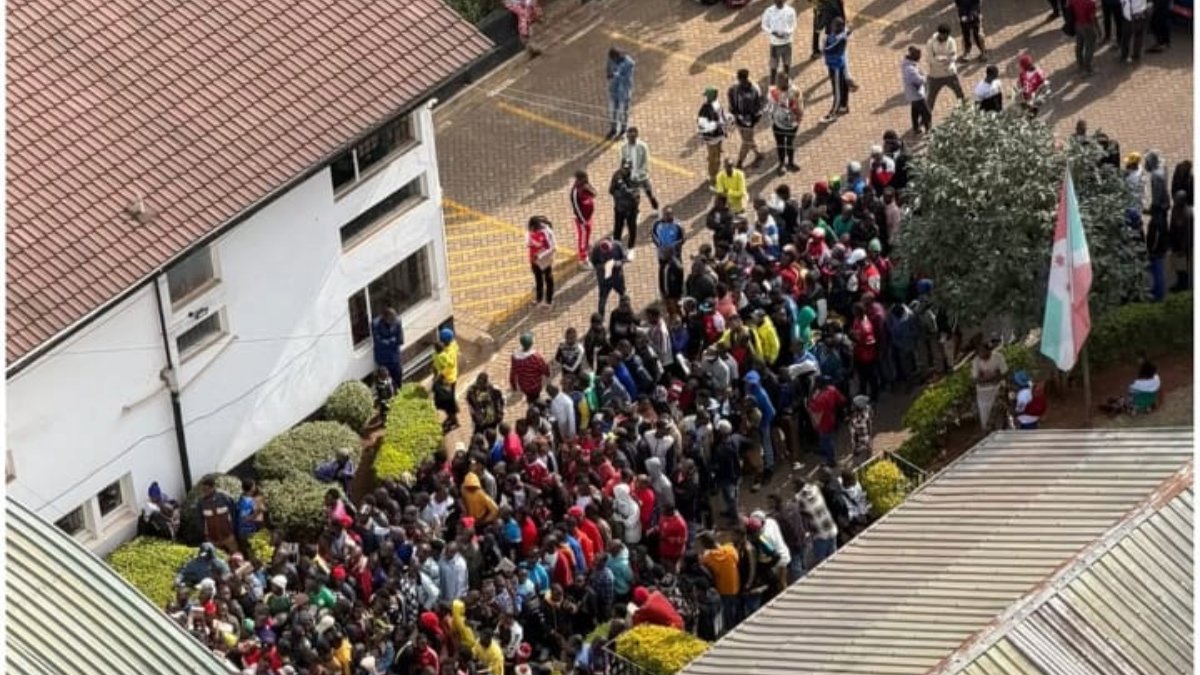
The announcement comes as hundreds of Burundians gathered outside their embassy in Nairobi on Monday, with some seeking travel documents to return home amid uncertainty following Ruto’s directive.
But the government is now sending a different message: foreign nationals who come forward to regularise their status should not live in fear of immediate enforcement.
Undocumented Burundians given registration window
Owino said the government recognises that some East African nationals have been living and operating in Kenya without complete documentation, partly because of historical and regional circumstances.
“We call upon all undocumented East African Community nationals, and specifically Burundian citizens currently residing in Kenya, to immediately present themselves to their respective High Commissions or Embassies for formal identity registration,” Owino said.
The Ministry of Foreign Affairs will work with the Embassy of Burundi and other regional partners to process and regularise the cases.
And in what could be the most significant part of the announcement, the government said those who enter the registration process will be treated as legally present during the designated registration period.
“For the duration of this designated registration period, all individuals undergoing registration will be presumed legally present in the Republic of Kenya,” Owino said.
The government says the arrangement is intended to help undocumented migrants access services such as healthcare and banking while also giving them legal protection as their status is regularised.
Government warns against harassment
The clarification also came with a stern warning to security agencies, local authorities and members of the public.
Owino said no documented foreign national, or person undergoing the registration process, should be subjected to arbitrary harassment or discrimination.
“Any element seeking to exploit recent directives to fuel xenophobic sentiments or mistreat our neighbors will face the full force of the law,” he said.
The government further said it was working with civil society networks and humanitarian organisations to monitor the safety of migrants in urban centres.
The warning follows reports of anxiety among Burundians in Nairobi, with Reuters reporting that some people seeking to leave the country said they had received threats from neighbours.
Kenya says: This is not a blanket ban
The government also pushed back against reports and interpretations suggesting Kenya had effectively shut its doors to foreign nationals.
Owino said the measures announced by Ruto should not be understood as a blanket ban targeting East Africans.
“We note with concern that some media reports, including recent coverage by international outlets, have misinterpreted these administrative measures as a blanket ban or hostile action targeting foreign nationals, particularly those from East African states,” he said.
“The government categorically rejects this mischaracterisation.”
The spokesperson insisted that Kenya’s commitment to the East African Community Common Market Protocol remains unchanged.
“We view our East African neighbours not as foreigners but as brothers and sisters of our shared Jumuiya, our history, culture and destiny,” Owino said.
The clarification follows an earlier statement by Foreign Affairs Principal Secretary Korir Sing’Oei, who said foreigners with the required work permits and licences remain legally protected to operate in Kenya. He specifically said Burundians and other Africans are free to live and work in Kenya provided they comply with Kenyan law.
What triggered the confusion?
Ruto’s September 2 remarks to Kenyan traders sparked widespread debate after he directed authorities to act against foreigners engaged in small-scale businesses.
The government’s latest clarification says the intention is to regulate small-scale retail and informal trade, protect local livelihoods and strengthen Kenya’s national identity systems.
It also linked the measures to the proposed Local Content Bill, 2025, which is currently before Parliament.
The controversy, however, quickly moved beyond business competition.
For many Burundians who depend on small businesses in Nairobi and other urban centres, uncertainty over the directive created fears that they could be forced out of the country.
Those fears were visible on Monday when large numbers gathered at the Burundi Embassy carrying luggage and seeking documents to return home.
The government’s latest announcement could therefore mark an important shift in the unfolding situation: instead of simply leaving, undocumented East Africans are being asked to come forward and regularise their status.
For Burundians currently living in Kenya, the next crucial question will be how the registration window works, what documents will be required and how long the process will remain open.
The government says those details will be communicated through the respective foreign missions.
For now, Nairobi’s message is clear: Kenya says it will enforce its laws on immigration and trade, but it insists that the measures are not a war against East Africans — and that xenophobia will not be tolerated.
Also Read : Ruto Says New Law Will Block Foreign Hawkers From Doing Business in Kenya