
Dolly Parton spent most of her life in the spotlight. But when it came to death, the country music legend appears to have wanted things done very differently. Parton died on August 25, 2026, at the age of 80 following a brief battle with cancer. But the first public announcement did not come from a publicist, a news conference or a major entertainment company. It came from her nephew, Bryan Seaver. And that was not an accident. Seaver revealed that Parton had asked him years earlier to be the person who would announce her death. The request had stayed with him until the moment he finally had to carry it out. That detail is only the beginning. From her private funeral wishes to her refusal to accept some of America’s highest honours, Parton had spent years making decisions that did not always fit the expectations that came with being one of the world’s most famous women. Here are some of the most revealing — and sometimes controversial — parts of her final chapter.
1. She decided years ago who would announce her death
When the news broke, many fans were struck by the fact that Bryan Seaver was the one delivering it.
Seaver was not simply Parton’s nephew. He had also served as her head of security for more than two decades, following in the footsteps of his father, Larry.
In the emotional video posted on Parton’s official social media account, Seaver explained that the announcement was something his aunt had asked him to do years earlier.
It was an intensely personal way to break news that would normally be handled by a publicist or representative.
And it was very Dolly.
Even in death, she had decided who would speak for her.
2. She had already decided she wanted a very private funeral
Parton’s fame could have easily produced a huge celebrity funeral.
Instead, she wanted the opposite.
Her representatives said she had requested a small, private service for immediate family.
The family has also asked people who want to honour her to consider donating to her Imagination Library rather than sending flowers.
That decision is striking because Parton’s funeral could have attracted some of the biggest names in music and Hollywood.
She had worked with everyone from Whitney Houston and Kenny Rogers to Miley Cyrus and Paul McCartney.
Yet her final farewell was intended to belong to her family.
3. She had already chosen the song she wanted at her funeral
Parton had apparently thought about her own funeral long before it became a reality.
Years ago, she said she expected I Will Always Love You to be played when she died, just as the song had been played when Whitney Houston died.
But she also spoke about another song that had a deeply personal connection to her father: “Daddy Was an Old Time Preacher Man.”
The song was written and recorded by Parton and her sister Stella Mae, and Parton had previously explained why she wanted it included in her farewell.
Now, those old comments have taken on a very different meaning following her death.
4. Her final resting wishes were surprisingly specific
Parton’s nephew also revealed another unusual request.
She wanted to be laid to rest in what he described as a “beautiful bed of plush cotton.”
The imagery is striking for someone whose public image was built around heavy rhinestones, glamorous dresses and towering wigs.
Seaver explained that after a lifetime of wearing heavy rhinestones, she deserved to be comfortable and have some rest.
Her final resting place is also expected to be beside her late husband, Carl Dean, according to her nephew.
Dean died in March 2025 after nearly six decades of marriage to Parton.
5. Her health was more serious than many fans realised
This may be the detail that makes her death feel particularly sudden.
Just four days before she died, Parton spoke to PEOPLE about going through what she described as difficult times with her health.
She said she was still healing and still working, while also acknowledging that she had been dealing with health problems.
Her representatives later confirmed that she died following a brief battle with cancer.
That revelation has prompted renewed attention to her final public appearances.
In June, she appeared at the opening of Dolly’s Tennessean Travel Stop in Tennessee and looked upbeat to people attending the event. She also virtually accepted the Academy of Country Music Poet’s Award on August 19.
She was still talking about the future.
That makes her death only days later all the more striking.
6. She repeatedly rejected one of America’s biggest honours
Parton was offered the Presidential Medal of Freedom, the United States’ highest civilian honour, during Donald Trump’s presidency.
She turned it down.
Then it happened again.
Parton explained that the first refusals were connected to her husband’s illness and later her unwillingness to travel during the COVID-19 pandemic. She subsequently expressed concern about accepting such an honour because it could appear politically motivated.
Her decision became a talking point because Parton had built a reputation for being admired across political and cultural divides.
In other words, she was famous enough to be embraced by both sides — and determined enough not to let either side claim her.
That stance looks particularly interesting now.
After her death, President Trump ordered American flags to be flown at half-staff for a week in her honour.
The contrast is hard to miss: Parton had declined the honour, yet the White House still chose to honour her after her death.
7. She even rejected having a statue of herself
In 2021, Tennessee lawmakers proposed erecting a statue of Parton on the grounds of the state Capitol.
You might expect most celebrities to welcome that kind of tribute.
Parton didn’t.
She asked lawmakers to remove the proposal, saying she did not think it was appropriate to put her on a pedestal while the country was dealing with other problems.
It was another decision that showed how differently Parton viewed fame.
She had spent decades being celebrated, yet she repeatedly resisted the idea of turning herself into a political or cultural monument.
8. She never had children — and refused to let people define that decision for her
Parton’s personal life generated plenty of curiosity.
She and Carl Dean were married for nearly 60 years but never had children.
Over the years, people naturally wondered why.
Parton eventually addressed the subject herself, explaining that she and Dean had talked about having children when they were younger, but it simply never happened.
She later said she believed it was part of her path and that not having children gave her greater freedom to concentrate on music, business and philanthropy.
She also poured that maternal energy into her wider family and projects such as the Imagination Library.
It is an important distinction: there was public curiosity about her decision, but Parton did not treat being child-free as a tragedy.
She made it part of her own story.
9. She had already planned another goodbye — in music
Perhaps the strangest part of all is that Parton left behind a musical time capsule.
She recorded an unreleased song, “My Place in History,” and placed it inside a locked box at Dollywood’s DreamMore Resort.
The plan was for it to be opened in 2046, around what would have been her 100th birthday.
When she created the project, she imagined she might still be alive to see the moment.
She won’t be.
Now, a future generation could hear a Dolly Parton song for the first time in 2046 — long after the woman who recorded it is gone.
A goodbye that was unmistakably Dolly
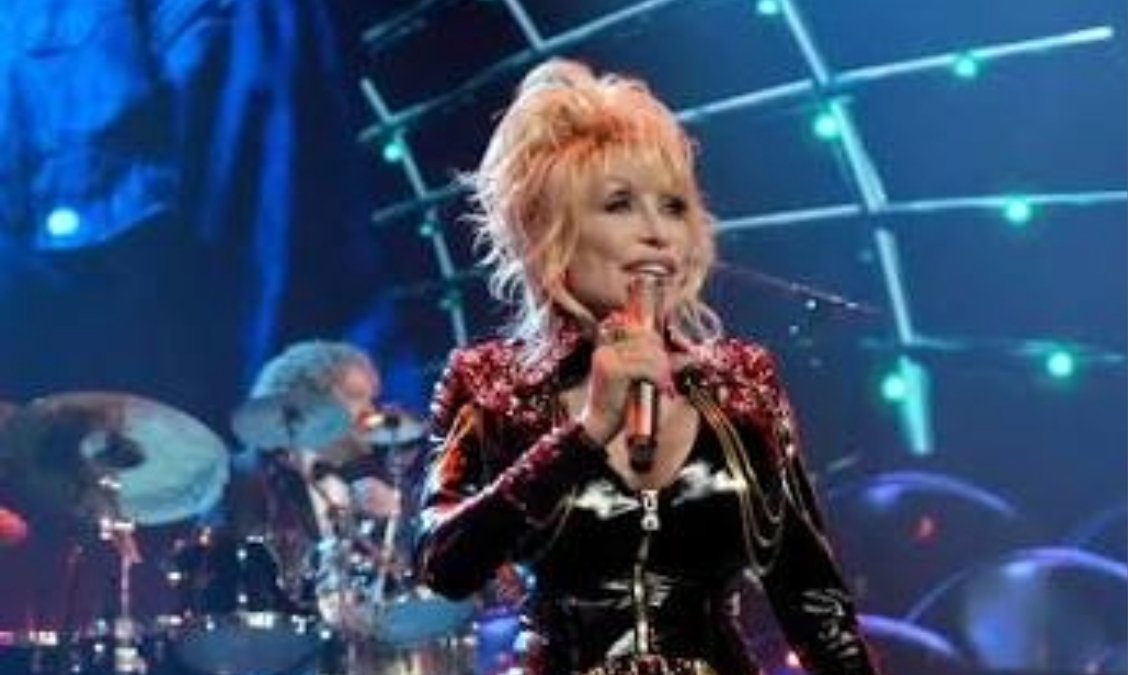
Dolly Parton spent her career controlling an image that could easily have become a caricature.
The wigs. The rhinestones. The humour. The enormous personality.
But behind all of that was someone who seemed to understand exactly how she wanted to live — and, eventually, how she wanted to leave.
She chose who would announce her death.
She wanted a private funeral.
She had thought about the music that would accompany her farewell.
She had specific wishes for her burial.
She rejected political honours when accepting them did not feel right to her.
She even rejected the idea of having a statue erected in her honour.
And just days before her death, she was still talking about what she wanted to accomplish.
Perhaps that is the most striking part of Dolly Parton’s final chapter.
She spent her life being one of the most visible people in the world, yet when it came to saying goodbye, she wanted to remain in control of the story.